

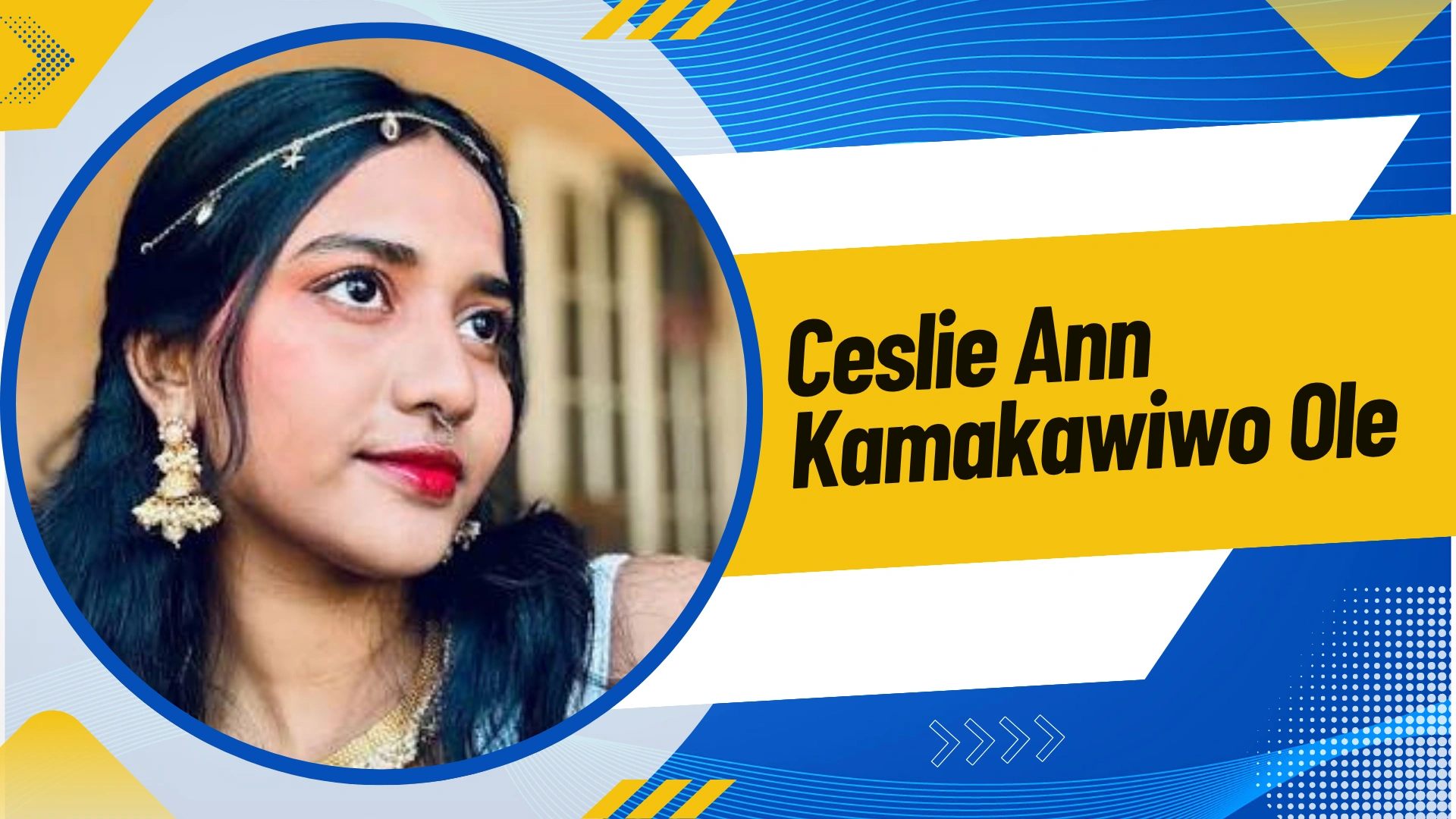
Ceslie ann kamakawiwo ole is the only daughter of legendary Hawaiian musician Israel Bruddah IZ Kamakawiwo’ole, whose voice touched millions worldwide. Born in 1983 in Hawaii, she grew up deliberately shielded from her father’s enormous fame. When Israel passed away in 1997 from respiratory failure, Ceslie was just 14, left to navigate grief, identity, and the weight of an iconic surname largely on her own. For nearly two decades, she lived invisibly and privately. That changed in 2015 when surveillance footage linked her to a stolen Mercedes SUV in Honolulu, and she later appeared on Hawaii’s Most Wanted list after violating probation terms. KHON2’s broadcast of the footage brought her story to national attention. Today, Ceslie Ann Kamakawiwo ‘ole is believed to be living quietly in Hawaii, raising her children away from public life. Her story is one of loss, struggle, and the very human effort to rebuild, behind one of music’s most beloved names.
Who Is ceslie ann kamakawiwo ole?
ceslie ann kamakawiwo ole was born in 1983 in Hawaii, the only child of Israel Ka’ano’i Kamakawiwo’ole and his wife, Marlene. Her full legal name, seldom shared publicly, is Ceslianne Wehekealake’alekupuna Ah Lo Kamakawiwo ole, a name as richly Hawaiian as her heritage. She goes simply by Wehi, a nickname that translates to something precious and adorned, fitting for a child of such extraordinary lineage.
Her father, Israel, known the world over as Bruddah IZ, was no ordinary musician. He was a singer, songwriter, ukulele player, and a passionate Hawaiian sovereignty activist who dedicated his life to his people and his islands. From 1976 until his death, he produced music that bridged the traditional and the modern, the local and the universal. His medley of Somewhere Over the Rainbow / What a Wonderful World, recorded in a single take at 3:00 in the morning, became one of the most widely heard recordings in modern music history, used in films, television commercials, and memorial services across the globe.
Israel and Marlene married in 1983, and into this world of music, culture, and aloha, ceslie ann kamakawiwo ole was born. Her parents kept her away from public scrutiny, determined to give her a childhood rooted in normalcy rather than fame. She attended a local school in Hawaii and grew up immersed in the richness of Native Hawaiian traditions, the same traditions her father championed through his art and activism.
Ceslie Ann Kamakawiwo’s Childhood and the Loss That Shaped Her
By any measure, the early years of Céleste Ann Kamakawiwo’ole were filled with warmth. Her father was a towering figure, both literally and culturally, but by all accounts, he was equally tender at home. He provided for his family and instilled in Ceslie a pride in her Hawaiian identity. Those who knew the family described her as kind-hearted, rooted in her community, and shaped by the aloha spirit her father embodied.
But life changed irrevocably on June 26, 1997. Israel Kamakawiwoole passed away at Queen’s Medical Centre in Honolulu at 12:18 in the morning from respiratory failure, the result of lifelong complications with obesity and related health conditions. He was 38 years old.
Ceslie was just 14.
The loss was devastating not only for the family but for all of Hawaii. When IZ passed, flags across the state were lowered to half-staff, an honor almost unheard of for a musician. His body lay in state at the Hawaii State Capitol, and an estimated 10,000 people came to pay their respects. His ashes were scattered in the ocean off Mākua Beach, a place he had loved dearly.
For a teenage girl who had already been shielded from the enormity of her father’s fame, his death thrust her into a grief that was also, paradoxically, very public. The man she knew as her father was also a cultural institution, and the world mourned alongside her in ways she had no framework to process. Growing up without such a father, especially one so universally beloved, left a void that shaped the entire trajectory of her adult life.
The Weight of Being ceslie ann kamakawiwo ole
There is a particular kind of pressure that comes with being the child of a legend. The world does not simply allow you to be yourself; it filters everything you do through the lens of who your parent was. For ceslie ann kamakawiwo ole, the name she carried was both a gift and a burden.
Israel’s legacy only grew after his death. His music was featured in major Hollywood films, his recordings were played at funerals and weddings worldwide, and he was celebrated as a symbol of Hawaiian pride and sovereignty. New generations continued to discover him, meaning that the name Kamakawiwo’ole never faded from public consciousness the way many artists’ names do after their passing.
Through all of this, Ceslie Ann Kamakawiwo ‘ole remained invisible, which was, by all accounts, exactly what she wanted. She did not pursue a music career. She did not give interviews. She did not appear at tribute concerts or on red carpets. She chose, deliberately and quietly, to live a private life in Hawaii, away from cameras and curiosity.
For nearly two decades after her father’s death, she succeeded.
What Led ceslie ann kamakawiwo ole to Hawaii’s Most Wanted List?
In February 2015, a Mercedes SUV was parked on Ala Wai Boulevard in Honolulu. Its owner reported it stolen the following morning, around 7:00 a.m. Later that afternoon, Honolulu Police received a tip that a matching vehicle had been spotted on Kamalo Street in Waipahu. Officers set up surveillance. At approximately 4:00 p.m., cameras captured a woman approach the SUV, get in, and drive away.
That woman was identified as ceslie ann kamakawiwo ole.
She was stopped and arrested on charges of auto theft. Authorities issued a $20,000 arrest warrant. It also emerged that ceslie ann kamakawiwo ole had been enrolled in Hawaii’s Opportunity Probation with Enforcement (HOPE) program, a program established in 2004 by First Circuit Court Judge Steven Alm. The program is designed to help individuals with prior offenses reintegrate into society through structured supervision and clear consequences for violations.
Ceslie had violated the terms of that probation. She had failed to appear for required check-ins, which under HOPE’s framework immediately triggered an active warrant. She went into hiding, and for months, law enforcement intensified efforts to locate her.
How the KHON2 Broadcast Put ceslie ann kamakawiwo ole in the Spotlight?
On August 7, 2016, KHON2, a Honolulu television news station, broadcast the surveillance footage of the Ala Wai Boulevard incident publicly. Ceslie Ann Kamakawiwo’s name was formally placed on Hawaii’s Most Wanted list. The story spread rapidly, reaching audiences far beyond the islands.
For many, the revelation was jarring. Here was the daughter of IZ, the man whose voice had carried messages of peace, love, and unity to millions, now appearing on a most-wanted list. The contrast was almost too stark to process. Fans who had grown up with Israel’s music struggled to reconcile the gentle, hopeful spirit of Somewhere Over the Rainbow with the news reports they were now reading about ceslie ann kamakawiwo ole.
Social media amplified the story further, turning what had been a local crime report into a nationally discussed narrative. Commentators weighed in. People questioned what had gone wrong. Others pushed back, arguing that judging the daughter by the father’s legacy was deeply unfair, that ceslie ann kamakawiwo ole was her own person, with her own story, and that reducing her to a footnote in her father’s biography was itself a kind of injustice.
She was subsequently apprehended. The precise legal outcome, whether she completed a sentence, entered a plea, or resolved the matter otherwise, was never publicly disclosed by the Honolulu Police Department or the Hawaii courts.
Ceslie ann kamakawiwo ole: More Than a Headline
It is tempting, and common, to reduce the story of ceslie ann kamakawiwo ole to the narrative of a famous man’s troubled daughter. But that framing is far too simple, and far too unkind.
Consider what her life actually contained: she lost her father at 14, under the most public of circumstances. She grew up carrying a name the entire world associated with beauty, peace, and aloha, a standard no human being could possibly live up to. She had no public platform to speak for herself, no means of shaping how the world perceived her, and no family institution to protect her. When she fell into legal trouble, she had no publicist, no record-label legal team, and no sympathetic media management. She was simply a woman, a Hawaiian woman in her thirties, a mother, who had made serious mistakes and was facing the consequences.
Reports from those close to her in the years following her legal troubles paint a picture of someone who was, at her core, a good person who had lost her way. The grief of losing a parent at such a formative age, combined with the peculiar isolation of being famous-by-association while simultaneously anonymous, can create fractures in a person that are not always visible until they surface in painful ways.
Where Is ceslie ann kamakawiwo ole Now?
Since the resolution of her legal case, ceslie ann kamakawiwo ole has returned to the private life she always preferred. By all available reports, she is living quietly in Hawaii, raising her children , reportedly five in number, away from public attention. She has no confirmed social media presence and has made no public statements.
Perhaps the most meaningful chapter of ceslie ann kamakawiwo ole’s story is not the one that aired on the evening news, but the quieter story being written now , one of a mother, of daily life, of personal rebuilding. Two of her children, Elijah and Kiara Parker, are said to share a love of music, particularly the ukulele, the same instrument their grandfather made famous the world over. In that small detail, there is something profoundly moving: the legacy of IZ living on not through public tribute, but through children playing music in an ordinary home.
Her mother, Marlene Kamakawiwo’ole, has continued to carry Israel’s legacy with dignity. She has supported causes her late husband cared about, including the Waianae Coast Comprehensive Health Center, and has never remarried. She was just 33 years old when she was widowed.
The Enduring Legacy Behind the Name ceslie ann kamakawiwo ole Carries
Whatever one makes of the events of 2015 and 2016, one thing remains unchanged: Israel Kamakawiwo’ole’s music continues to heal, to comfort, and to inspire. His voice , that remarkable, gentle tenor, still plays at weddings and funerals, in hospital rooms and living rooms, across every continent on earth. His 1993 album Facing Future remains one of the best-selling Hawaiian albums of all time. His image, his ukulele, and the flower lei he so often wore have become symbols of something larger than music: a reminder of the aloha spirit, of Hawaiian pride, and of the power of one human voice to reach across all boundaries of language and culture.
ceslie ann kamakawiwo ole, for her part, has chosen to live outside that legacy rather than within it. She does not appear to define herself by her father’s fame, nor by the brief and painful period when her own name made headlines. She is, by every account, simply a woman living her life in Hawaii, the place that made her father, and that made her.
The Story of ceslie ann kamakawiwo ole Is Still Being Written
The name ceslie ann kamakawiwo ole carries history within it: music, grief, legacy, struggle, and the quiet determination to begin again. Her story is not tidy or triumphant in the conventional sense. There are no redemption-arc interviews, no memoir, no documentary. There is only the private, ongoing work of being human in the wake of extraordinary circumstances.
What her father’s music told the world, that the world is wonderful, that somewhere over the rainbow dreams do come true, that love and peace are worth striving toward, perhaps it holds something for his daughter too. Not as the daughter of a legend, but simply as a person trying to find her way home.
ceslie ann kamakawiwo ole may have been born into an iconic family, but the life she is living now belongs entirely to her.
Conclusion
ceslie ann kamakawiwo ole is far more than a footnote in her father’s legendary story. She is a woman who grew up carrying an extraordinary name, lost her father at 14, stumbled publicly in her adult years, and quietly chose to rebuild away from the world’s gaze. Her journey reflects something deeply human: the struggle to find identity in the shadow of greatness, and the courage it takes to start over. While Israel Kamakawiwo’ole’s music continues to move millions worldwide, his daughter’s story takes a quieter turn: toward privacy, motherhood, and peace. ceslie ann kamakawiwo ole reminds us that behind every famous legacy are real people living real, imperfect lives.
Frequently Asked Questions
1. Who is ceslie ann kamakawiwo ole?
She is the only daughter of legendary Hawaiian musician Israel Bruddah IZ Kamakawiwo’ole, born in 1983 in Hawaii. She goes by the nickname Wehi.
2. What did ceslie ann kamakawiwo ole do?
She was arrested in 2015 for driving a stolen Mercedes SUV in Honolulu and later violated her HOPE probation terms, which landed her on Hawaii’s Most Wanted list.
3. Who was her father?
Israel Kamakawiwo ole, globally known for Somewhere Over the Rainbow , was a Hawaiian singer, ukulele player, and sovereignty activist who passed away in 1997 at age 38.
4. Where is ceslie ann kamakawiwo ole now?
She lives privately in Hawaii, raising her five children. She has no social media presence and stays completely out of the public eye.
5. Did she pursue music like her father?
No. ceslie ann kamakawiwo ole never entered the music industry. However, two of her children reportedly play the ukulele, keeping IZ’s musical spirit alive within the family.